

Why Electric Transaxle Selection Drives the Whole Vehicle
The electric transaxle is the part of the vehicle that turns electrical energy into motion, and the wrong choice will compromise every other decision. A transaxle that is undersized for the load will overheat; a transaxle that is oversized for the load will waste energy and drain the battery. A transaxle with the wrong gear ratio will leave the vehicle under-powered on a hill or over-revved on flat ground. For OEM engineers designing AGVs, floor scrubbers, golf carts, mobility scooters and small utility vehicles, the transaxle is the heart of the drivetrain, and the right supplier is a long-term partner, not a one-time vendor. This guide covers the specs, the integration steps and the sourcing mistakes that derail a program.
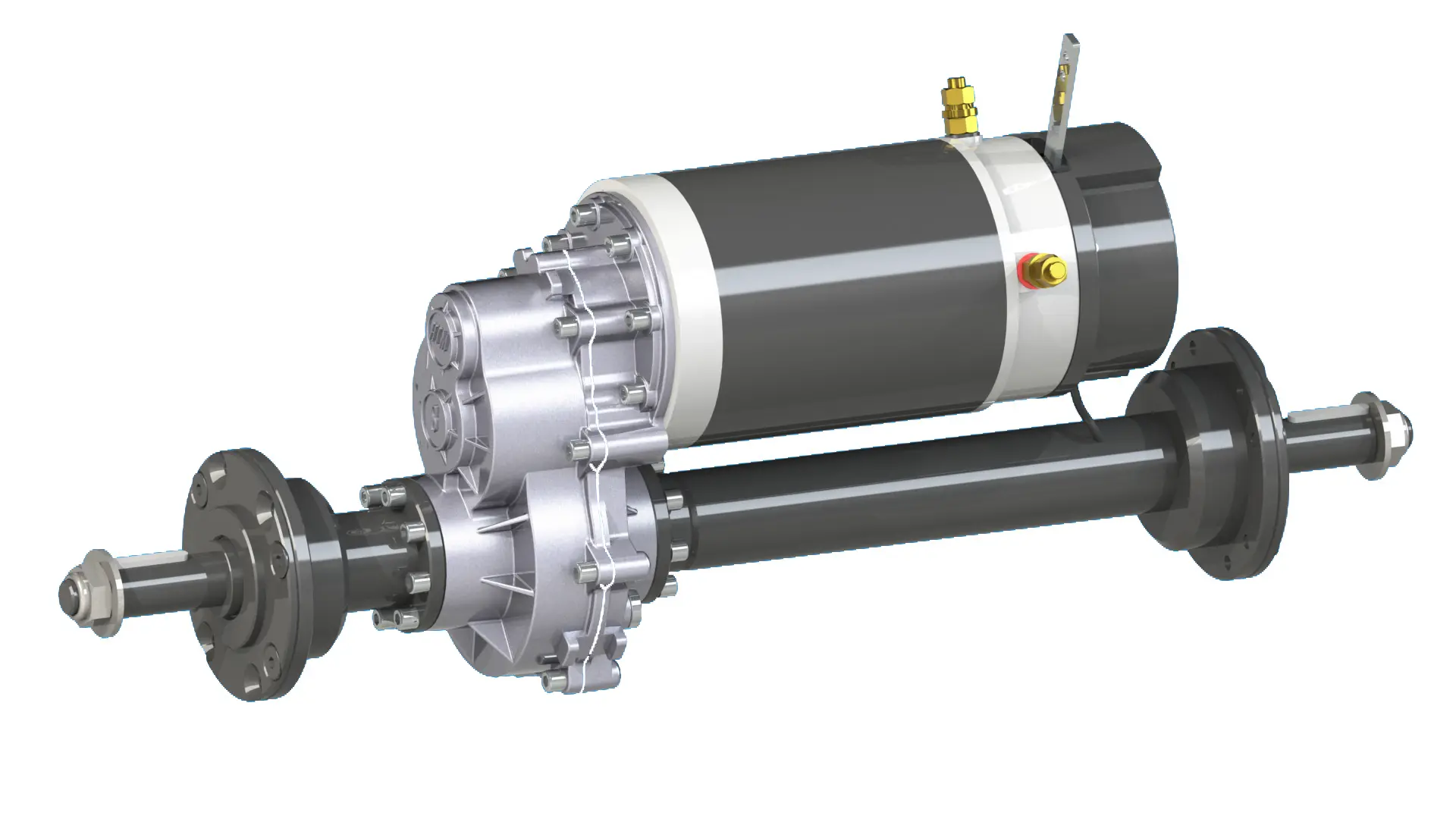
Voltage, Current and Battery System Compatibility
The first spec to lock in is the system voltage. Most AGVs and floor cleaning machines run on 24V, 36V or 48V lead-acid or lithium systems. A 72V system is common in larger utility vehicles. The transaxle must match the system voltage and the controller’s current limit. Under-spec the voltage and the transaxle will draw too much current and trip the controller. Over-spec the voltage and the controller will not push the transaxle to its rated torque. Always confirm the system voltage, the peak current and the continuous current with the supplier, and ask for a motor curve chart that shows torque vs. speed at the rated voltage.
Gear Ratio, Top Speed and Hill Climbing
The gear ratio decides the trade-off between top speed and hill-climbing torque. A high ratio (e.g., 20:1) multiplies the torque, so the vehicle climbs hills easily but has a lower top speed. A low ratio (e.g., 12:1) gives a higher top speed but less torque. For a floor scrubber that runs indoors on flat floors, a low ratio is fine. For a golf cart or a small utility vehicle that climbs hills, a high ratio is essential. The supplier should provide a torque-speed curve at the rated voltage and the rated load. Use that curve to validate the gear ratio against the vehicle’s weight and the expected grade.
Differential, Brake and Parking Lock
Most electric transaxles include a differential that allows the inner and outer wheels to turn at different speeds during a turn. A locked differential is simpler and cheaper but causes tire scrub on tight turns. A mechanical brake is often integrated into the transaxle for service braking, and a parking brake is mandatory for any vehicle that will be parked on a slope. Ask the supplier for the brake torque, the parking brake holding torque and the fail-safe behavior. A transaxle with a weak parking brake is a safety hazard, and a CE-marked vehicle in the EU will not pass an audit without a documented holding torque.
IP Rating, Sealing and the Operating Environment
The transaxle lives in a hostile environment: water, dust, detergent and road grime. The IP rating decides whether the unit survives. For indoor floor scrubbers, IP54 is the minimum. For outdoor utility vehicles, IP65 or higher is recommended. For vehicles that are pressure-washed, look for a unit with a sealed cable gland and a sealed motor housing. Ask the supplier for the IP test report and a description of the sealing method (O-rings, lip seals, magnetic seals). A transaxle that fails an IP test will corrode internally and fail within months.
Mounting, Shaft and Mechanical Integration
The transaxle must mount cleanly to the vehicle frame and connect to the wheels without play. Confirm the mounting pattern, the shaft diameter and the shaft length before you order. Most suppliers offer custom mounting plates and shaft extensions for OEM customers. A custom mounting plate costs USD 200 to 800 and is a one-time tooling charge. The wheel hub and the lug pattern must match the wheel the OEM has selected. Always order a 3D CAD model from the supplier and lay it into the vehicle chassis in CAD before committing to the production run.
Controller and CAN Bus Integration
Modern electric transaxles are paired with a motor controller that regulates current, monitors temperature and handles regenerative braking. The controller may be a simple potentiometer input or a CAN bus interface that communicates with the vehicle’s main controller. For an AGV, CAN bus is the standard because the AGV controller needs real-time data on speed, torque and fault status. For a small floor scrubber, a simple analog controller is often enough. Ask the supplier which controllers they support, and request a CAN bus protocol document for the higher-end transaxles. A controller that does not speak the right protocol will not integrate with the vehicle.
Cooling: Air-Cooled, Liquid-Cooled and Continuous Duty
Continuous-duty vehicles (those that run for hours without a break) need a transaxle with effective thermal management. Air-cooled units are simpler and cheaper but can overheat in a hot climate or under heavy load. Liquid-cooled units add a small radiator and pump but can sustain a much higher continuous torque. For indoor floor scrubbers that run in a 40 degrees Celsius ambient, air-cooled is usually fine. For outdoor utility vehicles in hot climates or vehicles that climb long grades, liquid-cooled is the safer choice. Ask the supplier for a thermal derating curve that shows how the rated torque drops with ambient temperature.
Noise, Vibration and the End-User Experience
Noise and vibration are not just comfort issues; they are also durability signals. A noisy transaxle is often a sign of gear-mesh issues, bearing wear or imbalance. Most OEM buyers specify a noise level below 65 dB at one meter for indoor vehicles. Vibration is harder to specify, but a vibration-isolated mounting plate between the transaxle and the frame reduces cab vibration and extends the life of the bearings. Always listen to the transaxle under load in the supplier’s test bay before signing off. A 30-second bench test catches issues that a spec sheet cannot.
Certifications and Compliance
An electric transaxle is a sub-assembly, so it is usually certified as part of the vehicle rather than as a standalone product. For an EU vehicle, the transaxle must support the CE Machinery Directive and the EMC Directive at the vehicle level. For a US vehicle, the transaxle must not introduce FCC Part 15 emissions issues. For a road-going vehicle, additional standards apply (e.g., FMVSS, ECE). Always ask the supplier for a Declaration of Incorporation and the test reports they have on file. A supplier with a strong regulatory team will save the OEM months of paperwork.
Common Sourcing Mistakes
The most common mistake is selecting a transaxle by peak torque instead of continuous torque. Peak torque is the maximum the unit can produce for a few seconds; continuous torque is what the unit can produce for hours. Designing around peak torque leads to overheating and premature failure. A second mistake is ignoring the gear ratio; a high-torque, low-speed transaxle will not suit a vehicle that needs a high top speed. A third mistake is skipping the integration test; a transaxle that performs on the bench may not perform in the vehicle, so a vehicle-level test is mandatory before committing to volume.
Tip: Run the transaxle at the rated load for 30 minutes in the supplier’s test bay, then disassemble the gearbox and check for hot spots, oil discoloration and gear-mesh marks. A 30-minute teardown reveals weak bearings and marginal gear lubrication that no spec sheet will predict, and it costs almost nothing compared with a vehicle-level failure.
How to Structure a Transaxle Sourcing Engagement
Start with a technical specification sheet that includes the system voltage, the peak and continuous torque, the gear ratio, the top speed, the IP rating, the brake and parking brake requirements, and the controller interface. Send the spec to three to five suppliers and ask for a written quote, a CAD model, a motor curve and a sample. Order one sample of each shortlisted unit and run a vehicle-level test. Choose the supplier that offers the best combination of price, lead time, technical support and warranty. Aim for a two-year warranty on the motor and a one-year warranty on the gearbox. Stock spare parts locally and keep the supplier’s contact for a fast response.
Frequently Asked Questions
What voltage should I choose for an AGV transaxle?
Most AGVs run on 24V, 36V or 48V systems. The choice depends on the battery pack and the controller. Higher voltage reduces current draw and allows thinner cables, but it raises the cost of the controller and the safety requirements. Always match the transaxle to the system voltage.
What is the difference between peak torque and continuous torque?
Peak torque is the maximum torque the transaxle can produce for a few seconds. Continuous torque is what the transaxle can produce for hours without overheating. Design around continuous torque, and use peak torque only for short bursts like hill starts.
What IP rating do I need?
For indoor floor scrubbers, IP54 is the minimum. For outdoor utility vehicles, IP65 or higher is recommended. For vehicles that are pressure-washed, look for a sealed cable gland and a sealed motor housing.
Can I use one transaxle for multiple vehicle models?
Sometimes. A modular transaxle platform with different gear ratios, brake configurations and mounting plates can cover multiple vehicle models and reduce the SKU count. Ask the supplier for a platform overview and confirm that the common parts are shared.
What certifications should a transaxle carry?
The transaxle is usually certified as part of the vehicle. For the EU, the vehicle must meet the CE Machinery Directive and the EMC Directive. For the US, the transaxle must not introduce FCC Part 15 issues. Ask the supplier for a Declaration of Incorporation and the test reports on file.
What is the typical lead time for a custom transaxle?
For a stock configuration, plan 30 to 45 days. For a custom gear ratio, mounting plate or shaft, plan 60 to 90 days. Sample lead time is usually 7 to 14 days, which is fast enough to support a vehicle development cycle.
How do I check the quality of a transaxle sample?
Run the transaxle at the rated load for 30 minutes, then disassemble the gearbox and inspect for hot spots, oil discoloration and gear-mesh marks. Listen for abnormal noise and check the bearing temperature. A 30-minute teardown reveals weak bearings and marginal gear lubrication.
What controller should I pair with the transaxle?
Pair the transaxle with a controller from the same supplier or a controller that is on the supplier’s approved list. A mismatched controller can trigger faults and reduce efficiency. For AGVs, choose a controller with a CAN bus interface that supports the vehicle’s protocol.
What is the best way to mount a transaxle?
Use a vibration-isolated mounting plate between the transaxle and the frame. The plate reduces cab vibration and extends bearing life. Confirm the mounting pattern and the shaft dimensions with the supplier before ordering. A custom mounting plate is a one-time tooling charge of USD 200 to 800.
Can the transaxle be repaired in the field?
Some transaxles are field-serviceable with a replaceable motor, brake pads and bearings. Others are sealed units that must be returned to the factory. Choose a field-serviceable design if your customer base is in remote locations, and stock spare parts locally to keep service fast.
Related Pages
- Electric Transaxle Technical Specifications Guide
- What Voltage Electric Transaxle Should You Choose
- Electric Transaxle vs Gearbox
- How to Match Electric Transaxle with Motor
Post time: Sep-07-2026