

Electric Transaxle Technical Specifications Guide: Complete Buyer’s Reference for Parameter Matching & Selection
Introduction
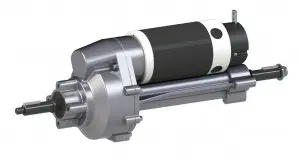
Electric transaxles serve as the integrated power core for light electric mobility equipment, compact industrial handling machinery, and low-speed electric vehicles. Unlike split motor and reduction gear assemblies, integrated transaxles combine DC drive motors, reduction gearboxes, differential structures, and output axles into one compact unit, streamlining mechanical layout, cutting assembly labor, and optimizing power transmission efficiency.
For OEM purchasing managers, mechanical design engineers, and equipment manufacturers, sorting out standard technical specifications is the foundation of model matching, cost control, and long-term equipment reliability. Many procurement teams face common pain points: mismatched voltage and power leading to insufficient climbing performance, unoptimized gear ratios causing high energy consumption, unclear load limits triggering premature gear wear, and overlooked installation dimensions delaying whole-machine design iteration.
This guide breaks down every core technical specification of electric transaxles, explains parameter selection logic aligned with real application scenarios, and outlines standard verification metrics buyers must review before bulk orders. It covers low-power light-duty transaxles (300W–1000W) and medium-power heavy-duty integrated drive assemblies (1500W–2200W), covering trolleys, cleaning equipment, mobility trikes, electric tractors, and warehouse handling carts.
1. Core Power & Electrical Specifications
Electrical parameters directly determine battery matching, runtime, peak power output, and overall equipment energy efficiency—these are the first set of indicators buyers need to confirm.
1.1 Rated Operating Voltage
24V DC is the mainstream standard for light industrial and mobility transaxles, with consistent compatibility across lithium and lead-acid battery packs. Voltage classification corresponds strictly to equipment load tiers:
- 24V 300W–800W: Light loads (strollers, small washing carts, compact cleaning machines)
- 24V 1000W–1500W: Medium loads (warehouse trolleys, three-wheel mobility vehicles)
- 24V 2200W: Heavy low-speed equipment (mini electric tractors, heavy-duty transport carts)
Critical buying note: Mixing voltage mismatched transaxles and battery packs causes continuous overcurrent, permanent motor coil burnout, and shortened service life of controllers. Always lock in unified voltage standards during early project design.
1.2 Rated Power & Peak Torque
Rated power reflects sustained stable output under continuous operation; peak torque delivers instantaneous power for startup, heavy load, and climbing conditions, and is limited to short-duration use (30–60 seconds to avoid thermal overload).
Common commercial transaxle power-torque matching benchmarks:
- 300W DC transaxle: Rated torque 4–6Nm, peak torque 12–18Nm
- 500W DC transaxle: Rated torque 7–9Nm, peak torque 22–28Nm
- 800W DC transaxle: Rated torque 10–13Nm, peak torque 32–38Nm
- 1000W DC transaxle: Rated torque 14–16Nm, peak torque 40–48Nm
- 1500W DC transaxle: Rated torque 16Nm, peak torque 60–72Nm
- 2200W DC transaxle: Rated torque 20–24Nm, peak torque 85–100Nm
When evaluating torque output, buyers should cross-reference maximum climbing gradient requirements. For equipment needing 12°–18° stable climbing, select transaxles with peak torque at least 1.8 times the calculated theoretical load torque.
1.3 Motor Type & Maximum No-Load Speed
Permanent magnet DC brushed motors dominate entry-level transaxles with lower upfront costs and simple controller matching. Brushless DC variants deliver higher efficiency (90%+ continuous efficiency), lower noise, and longer maintenance cycles for mid-to-high-end equipment.
No-load motor speed ranges from 2800RPM to 4500RPM, paired with internal reduction gear ratios to adjust final wheel output speed. High base motor RPM pairs with larger reduction ratios for low-speed, high-torque operation; low base RPM matches small ratios for high-speed light transport equipment.
2. Mechanical Transmission Specifications
Transmission structure parameters decide load capacity, running noise, service life, and space layout compatibility—key for mechanical engineers conducting whole-machine structural design.
2.1 Reduction Gear Ratio
The gear ratio controls torque amplification and wheel rotation speed, the most critical adjustable specification for scenario adaptation. Standard single-stage and two-stage reduction ratios for small electric transaxles range from 10:1 up to 60:1:
- Ratio 10:1–20:1: Light fast-moving equipment (small cleaning carts, light strollers)
- Ratio 25:1–40:1: Balanced speed and torque (warehouse trolleys, mobility trikes)
- Ratio 45:1–60:1: Heavy climbing loads (mini tractors, heavy transport carts)
Two-stage planetary gear reduction delivers smoother power delivery and lower NVH compared to single-stage helical gear structures, making it ideal for passenger-oriented mobility equipment. Single-stage gearboxes feature lighter weight and lower cost for industrial cleaning machinery with less strict noise limits.
2.2 Rated Load & Maximum Overload Capacity
Rated load represents the safe continuous axle load under 8-hour daily operation; maximum overload supports short-term startup and bumpy road impact loads (allowable for less than 1 minute per cycle).
- 300W–800W transaxles: Rated axle load 300–600kg, max overload 900kg
- 1000W–1500W transaxles: Rated axle load 800–1200kg, max overload 1600kg
- 2200W heavy-duty transaxles: Rated axle load 1500–2000kg, max overload 2800kg
Buyers must match axle load to full vehicle curb weight plus cargo payload, with a 20% load safety margin reserved for uneven ground and frequent startup stops to prevent gear tooth fracture and axle deformation.
2.3 Output Shaft & Mounting Dimensional Parameters
Standardized installation dimensions eliminate custom machining costs for OEMs, and core dimensional specs to collect during supplier technical review include:
- Output axle diameter, keyway size, and wheel hub mounting hole spacing
- Overall transaxle length, width, height for frame space reservation
- Motor side mounting flange size and bolt hole layout
- Ground clearance height after assembly, critical for off-road or bumpy factory floor operation
Custom dimension modification will extend sample development cycles by 2–4 weeks; prioritize standard size transaxles for mass production cost efficiency.
2.4 Gearbox Material & Sealing Grade
High-grade integrated aluminum alloy housings reduce total assembly weight while improving heat dissipation for continuous high-power operation. For heavy-duty outdoor equipment, cast iron reinforced housings offer superior impact resistance against debris and bump collisions.
IP54 to IP55 sealing is the standard for industrial transaxles, blocking dust, splashing water, and cleaning liquid intrusion. Equipment operating in car wash, wet workshop environments requires upgraded IP65 sealed assemblies with dual oil seals on output shafts to prevent gear oil leakage and internal corrosion.
3. Environmental & Durability Technical Metrics
These specifications determine equipment adaptability across global regional markets and reduce after-sales failure rates for end users, often overlooked by entry-level procurement teams.
3.1 Operating Temperature Range
Standard transaxles support stable operation from -10°C to +50°C, suitable for temperate zone indoor and outdoor use. For cold-climate markets (Northern Europe, North America winter operations), low-temperature modified units adopt low-viscosity gear oil and cold-resistant motor coils to avoid startup torque loss below -20°C. High-temperature tropical environments require enhanced heat sink structures on motor housings to prevent thermal power reduction under sustained sunlight exposure.
3.2 Service Life & Maintenance Cycle
Under rated load and regular maintenance, brushed motor transaxles deliver 3,000–5,000 working hours; brushless models extend service life to 8,000–12,000 hours. Gear oil replacement cycles follow load intensity:
- Light load (≤50% rated load): Replace gear oil every 1,200 working hours
- Medium/heavy load (≥70% rated load): Replace gear oil every 600 working hours
Standard gear oil capacity ranges from 0.8L to 1.5L across all transaxle models, a metric useful for drafting post-sales maintenance manuals for end customers.
3.3 NVH Noise Standard
Low-noise precision ground helical gear transaxles operate at ≤62dB under no-load conditions, compliant with indoor warehouse, supermarket, and medical mobility equipment noise regulations. Ordinary straight gear assemblies register 68–75dB, acceptable for outdoor agricultural and construction cleaning machinery without strict noise limits.
4. Application-Based Parameter Matching Cheat Sheet
This section aligns transaxle technical specs with mainstream end-use equipment, a high-value reference for procurement engineers to quickly narrow model options without repeated supplier technical communication.
表格
| End Equipment Type | Recommended Voltage | Power Range | Optimal Gear Ratio | Key Spec Priorities |
|---|---|---|---|---|
| Small cleaning trolley / car wash cart | 24V | 300W–500W | 20:1–30:1 | IP55 waterproof, low noise, compact size |
| Warehouse material handling trolley | 24V | 800W–1000W | 30:1–40:1 | High rated load, long service life |
| Three-wheel mobility passenger trike | 24V | 1000W–1500W | 25:1–35:1 | Brushless motor, low NVH, stable torque output |
| Mini electric tractor / heavy transport cart | 24V | 2200W | 40:1–60:1 | Max peak torque, cast iron housing, high overload resistance |
| Light stroller / portable mobility cart | 24V | 300W | 10:1–20:1 | Ultra-light weight, simple mounting structure |
5. Common Specification Mismatch Mistakes Buyers Should Avoid
- Overlooking peak torque vs climbing gradient: Selecting low-torque transaxles for hilly working conditions leads to frequent motor overheating and shutdowns. Always calculate required torque based on maximum gradient and full payload.
- Ignoring sealing grade for wet-use equipment: Standard IP54 transaxles rapidly develop oil leaks and motor short circuits in car wash or outdoor rainy environments.
- Oversizing power for light-load equipment: Excess high-power transaxles increase overall vehicle weight, raise battery power consumption, and inflate raw material procurement costs unnecessarily.
- Disregarding mounting dimensional consistency: Custom non-standard transaxles require secondary frame machining, increasing mass production assembly time and labor costs.
- Mixing brushed/brushless motor controllers: Electrical parameter mismatch causes unstable speed regulation, jitter during startup, and irreversible controller damage.
6. Frequently Asked Technical Specification Questions
Q1: Can I adjust the transaxle speed by swapping gear ratios after purchasing standard models?
A: Gear ratio replacement requires complete disassembly of the gearbox and matching internal gear sets. It is more cost-effective to confirm target wheel speed and select the correct ratio during sample ordering, rather than modifying finished assemblies post-purchase.
Q2: What technical documents should suppliers provide to verify specification compliance?
A: Request motor performance test reports, load durability test data, IP sealing certification documents, dimensional engineering drawings, and torque-power curve charts for formal bulk order review.
Q3: How does ambient temperature affect rated power output?
A: At temperatures above 50°C, continuous power output will automatically derate by 15%–25% to protect motor windings. For year-round high-temperature operating environments, upgrade to brushless transaxles with enhanced heat dissipation structures.
Q4: Is dual-motor transaxle configuration necessary for heavy climbing equipment?
A: Single-motor high-torque 2200W transaxles satisfy most low-speed heavy load scenarios. Dual-motor integrated assemblies are only recommended for equipment with sustained climbing gradients exceeding 18°, where dual independent torque output improves traction stability.
Conclusion
Mastering electric transaxle technical specifications eliminates blind model selection, reduces prototype iteration costs, and improves long-term equipment operational stability for OEM manufacturers. Every electrical, mechanical, and environmental parameter interlinks to define real-world performance, so procurement and design teams must align target equipment operating conditions with transaxle rated indicators before finalizing supplier selections.
For further technical support on custom parameter matching, dimensional drawing review, and bulk order specification confirmation, reach out to professional transaxle engineering teams to access customized performance calculation and sample testing services tailored to your equipment platform.
Post time: Jun-28-2026