Wholesale Electric Transaxle Cost Guide: Key Factors & Budget Breakdown
Date: 2026-05-22
Sourcing
electric transaxles in bulk is a core task for equipment manufacturers, distributors, and project procurement specialists. Every wholesale buyer aims to balance stable quality, reasonable pricing, and long-term supply reliability. Many buyers struggle with unpredictable price gaps, unclear configuration pricing standards, and hidden costs that inflate overall budgets.
Understanding what drives electric transaxle wholesale costs helps you avoid overspending, select the right model for your application, and negotiate better terms with suppliers. This guide breaks down core cost factors, model-based price ranges, hidden expense pitfalls, and practical wholesale purchasing tips tailored to global procurement needs.
Table of Contents
1 Core Basics of Electric Transaxle Wholesale Pricing
2 Key Factors That Determine Electric Transaxle Wholesale Costs
3 Wholesale Price Range by Common Electric Transaxle Specifications
4 How Supply Chain & Order Volume Affect Bulk Pricing
5 Hidden Costs Buyers Overlook in Electric Transaxle Procurement
6 Practical Tips to Cut Wholesale Electric Transaxle Budget
7 How to Match Transaxle Specifications to Actual Application Needs
8 Future Price Trends for Global Wholesale Electric Transaxles
1 Core Basics of Electric Transaxle Wholesale Pricing
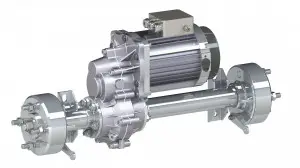
Electric transaxles integrate DC motors, gear reduction systems, and drive axle structures, widely used in electric tractors, trolleys, cleaning equipment, mobility tricycles, and sightseeing vehicles. Wholesale pricing differs drastically from retail pricing, as it relies on order quantity, configuration standard, material grade, and after-sales terms as the core pricing benchmarks.
For bulk buyers, wholesale cost is not just the unit product price. It includes logistics, certification fees, aftermarket maintenance costs, and customized modification expenses. Novice procurement often only focuses on the unit price, ignoring subsequent hidden costs that raise total investment.
Stable wholesale pricing always follows one rule: matched configuration, standardized production, and scaled orders bring the most cost-effective quotes. High-spec customized models and small-batch trial orders will inevitably have higher unit costs.
2 Key Factors That Determine Electric Transaxle Wholesale Costs
Multiple core variables directly change the wholesale quote of electric transaxles. Mastering these factors allows you to quickly judge whether a supplier’s price is reasonable.
-
Motor Power & Voltage
Low-power models (300W-800W 24V) are the most affordable, suitable for strollers, washing equipment, and small cleaning machines. Medium-power 1000W-1500W 24V versions fit electric trolleys and light agricultural machinery. High-power 2000W-2200W models with high torque are used for electric tractors and heavy mobility equipment, with significantly higher material and production costs.
-
Torque Output
Higher torque requires precision gear sets and reinforced axle housings. Transaxles with 16NM and above torque adopt alloy gear materials and precision processing technology, costing more than standard low-torque versions. Torque matching directly affects equipment load capacity, and blind pursuit of high torque will cause unnecessary budget waste.
-
Material & Craftsmanship Grade
Economical models use ordinary cast iron housings and standard carbon steel gears, with low cost and basic durability. High-end wholesale versions adopt integrated die-casting shells, wear-resistant alloy gears, and sealed waterproof structures, featuring longer service life and stronger environmental adaptability, suitable for commercial and industrial scenarios.
-
Certification & Quality Standard
Products with CE, ISO9001 and international standard certifications need to meet global production and testing standards, with higher production and inspection costs. These certified models are mandatory for sales in Europe, North America and other regions, while non-certified low-price products are only suitable for limited regional markets.
-
Customization Requirements
Custom shaft length, interface structure, wiring harness adjustment, and special waterproof and dustproof modifications will increase mold opening and production costs. Standard general transaxles always have the most stable and lowest wholesale prices.
3 Wholesale Price Range by Common Electric Transaxle Specifications
The following is a global mainstream wholesale price reference for bulk orders (large batch standard order, no customization, basic packaging), helping buyers quickly budget:
| Transaxle Specification |
Typical Application |
Wholesale Unit Price Level |
Durability Grade |
| 24V 300W-400W DC Motor |
Strollers, Small Cleaning Machines |
Low |
Standard Daily Use |
| 24V 500W-800W DC Motor |
Car Washing Equipment, Light Trolleys |
Low-Medium |
Commercial Basic Grade |
| 24V 1000W-1500W Standard Version |
Electric Trolleys, Agricultural Small Machinery |
Medium |
Industrial General Grade |
| 1.5KW 16NM High Torque Version |
Electric Tractors, Heavy-Duty Transport Equipment |
Medium-High |
Reinforced Industrial Grade |
| 24V 2200W High Power Version |
Large Mobility Equipment, Special Engineering Vehicles |
High |
Heavy-Duty Commercial Grade |
Price notes: Unit price drops significantly when order quantity exceeds 500 units; small trial orders below 100 units will have a 15%-25% price increase. Certified models are 10%-18% higher than non-certified standard models.
4 How Supply Chain & Order Volume Affect Bulk Pricing
Complete supply chain layout is the core foundation for stable wholesale pricing. Suppliers with integrated parts procurement, independent production, and quality control can control costs better and offer more competitive bulk quotes.
Order volume is the most direct factor affecting wholesale prices. Bulk purchasing follows a clear tiered pricing mechanism: small trial batches have high single costs, medium batches enjoy preferential factory prices, and large long-term framework orders can get the lowest ex-factory prices plus exclusive after-sales policies.
In addition, seasonal raw material fluctuations (copper, aluminum, alloy steel) will cause periodic price adjustments of electric transaxles. Procurement buyers can lock in prices in off-seasons to avoid cost increases caused by raw material peaks.
5 Hidden Costs Buyers Overlook in Electric Transaxle Procurement
Many wholesale buyers face budget overruns not from product unit prices, but from ignored hidden costs:
- International logistics and container freight: Small batch scattered shipments have much higher per-unit logistics costs than full-container bulk shipping.
- Certification and customs clearance fees: Products sold to Europe and North America need CE, FCC and other certification filings, with additional annual audit costs.
- After-sales maintenance and replacement parts: Low-cost transaxles have high failure rates, leading to long-term replacement and maintenance labor costs.
- Packaging and labeling customization: Neutral packaging, brand labeling, and export fumigation packaging all generate extra expenses.
- Delivery delay loss: Unstable suppliers cause production line shutdown losses for buyers, which is an invisible cost difficult to quantify.
6 Practical Tips to Cut Wholesale Electric Transaxle Budget
For global wholesale buyers, reasonable cost control does not mean choosing the lowest price, but optimizing the overall procurement cost. Here are actionable tips:
- Prioritize standard general models, reduce unnecessary customization. Customization is the main reason for price increases; standard models have mature production lines and stable costs.
- Combine consolidated ordering. Integrate multiple specification demands into one bulk order to obtain tiered preferential prices and share logistics costs.
- Sign long-term framework supply agreements. Long-term cooperation with qualified suppliers can lock in raw material fluctuation risks and stabilize annual procurement costs.
- Balance quality and price rationally. Avoid blindly choosing ultra-low-price non-certified products. High failure rates will offset the advantage of low unit prices.
- Optimize logistics mode. Choose full-container sea freight for large batches, and combine consolidated logistics for small batches to reduce single-piece transportation costs.
7 How to Match Transaxle Specifications to Actual Application Needs
Matching specifications accurately is the best way to save wholesale costs. Over-configuring will waste budget, while under-configuring will lead to equipment failure.
- Light scenarios (strollers, small cleaning tools): Choose 300W-800W low-power standard transaxles, cost-effective and fully meeting demand.
- Commercial scenarios (trolleys, car washing equipment): Select 1000W-1500W medium-power waterproof models, focusing on stability and wear resistance.
- Industrial and agricultural scenarios (electric tractors, heavy transport): Match high-torque 1.5KW and above versions with reinforced shell structures to adapt to heavy load and complex working conditions.
It is recommended to provide equipment load, working environment, and voltage requirements to suppliers, and let professionals recommend matched models to avoid wrong procurement and repeated replacement costs.
8 Future Price Trends for Global Wholesale Electric Transaxles
Driven by the booming global electric light equipment, agricultural machinery and mobility device market, the demand for electric transaxles keeps rising. The industry is expected to maintain a steady development trend in the next few years.
With the upgrading of production technology and scaled production of core parts, the wholesale price of standard conventional models will maintain a slight downward trend. High-torque, high-power and customized intelligent transaxles will keep stable prices due to technical and material barriers.
Meanwhile, global certification standards are becoming stricter, and low-quality non-certified products will gradually be eliminated from mainstream markets. Wholesale buyers should focus on certified stable supply chains in long-term procurement, achieving a balance between cost control and market sales competitiveness.
FAQs
What is the biggest factor affecting electric transaxle wholesale prices?
Motor power, torque grade and order volume are the three core factors; customization and certification standards are secondary key variables.
How to get the most cost-effective wholesale quote?
Choose standard models, place large-batch consolidated orders, and sign long-term supply framework agreements with regular suppliers.
Are low-price non-certified transaxles worth bulk purchasing?
Not recommended. They have high failure rates, cannot enter mainstream regional markets, and subsequent maintenance and replacement costs are higher than certified products.
How to avoid hidden procurement costs?
Confirm logistics, certification, packaging and after-sales terms with suppliers in advance, and list all fees in the quotation contract to avoid subsequent additional charges.
Does order delivery time affect wholesale pricing?
Yes. Urgent small-batch orders require suppliers to adjust production schedules, resulting in a 10%-20% increase in unit prices; conventional delivery cycles enjoy the most favorable quotes.
Conclusion
The Wholesale Electric Transaxle Cost Guide covers core pricing factors, specification-based price ranges, supply chain impacts, hidden cost pitfalls, and practical procurement optimization tips. For global wholesale buyers, mastering pricing logic and application matching rules is the key to controlling procurement budgets.
It’s not about chasing the lowest unit price, but selecting transaxles with matched specifications, reliable quality and reasonable overall cost. By combining order volume optimization, standardized model selection and stable supply chain cooperation, buyers can effectively reduce comprehensive procurement costs and maintain long-term business competitiveness.
Post time: May-22-2026