

Low Cost Electric Transaxle Supplier: Complete Buying Guide for Global Buyers
When sourcing electric transaxles for electric vehicles, industrial trolleys, cleaning machines, or mobility equipment, balancing cost, reliability, and supply stability is one of the biggest challenges for buyers worldwide. A cost-effective electric transaxle supplier can directly lower your production costs, improve product competitiveness, and ensure stable delivery for bulk orders.
This guide shares what to look for in a low-cost electric transaxle supplier, key product selection criteria, application scenarios, and how to balance price and quality for long-term business success.
Table of Contents
- What is an Electric Transaxle & Why It Matters
- Core Advantages of Choosing a Cost-Effective Electric Transaxle Supplier
- Key Specifications to Compare Before Sourcing
- Typical Applications of Low-Cost Electric Transaxles
- How to Select the Right Transaxle for Your Equipment
- Questions to Ask Your Potential Supplier
- Conclusion: Build Stable, Cost-Efficient Supply
What is an Electric Transaxle & Why It Matters
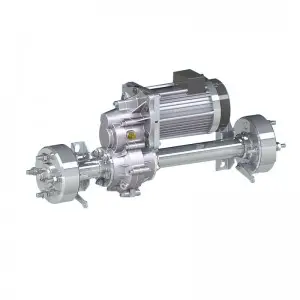
An electric transaxle integrates an electric motor, gearbox, differential, and axle into one compact unit. It provides both power and drive for electric equipment, replacing separate motor, transmission, and axle components.
For equipment manufacturers, the transaxle affects:
- Overall vehicle performance and efficiency
- Service life and failure rate
- Assembly complexity and production time
- Total cost of your finished product
A reliable low-cost transaxle helps you maintain quality while improving profit margins.
Core Advantages of Choosing a Cost-Effective Electric Transaxle Supplier
Stable and affordable electric transaxle suppliers offer more than just low prices. Here are the real benefits for buyers:
1. Lower Unit Cost Without Compromising Quality
Mature production lines, optimized material supply, and scaled manufacturing help reduce per-unit costs. You get durable components at a lower purchase price.
2. Complete Product Range for Versatile Matching
Professional suppliers provide a full lineup from 300W to 2200W, supporting 24V, 48V, and other voltage systems to fit different equipment.
3. Stable Supply Chain & On-Time Delivery
A complete supply chain reduces lead times and shortages, supporting mass production and seasonal order surges.
4. Responsive After-Sales Support
On-site service, technical support, and easy replacement parts lower your after-sales costs and improve customer satisfaction.
5. Wide Application Adaptability
Products are tested across multiple scenarios, ensuring stable performance in cleaning, logistics, mobility, and gardening equipment.
Key Specifications to Compare Before Sourcing
To avoid wrong purchases and unnecessary costs, focus on these core parameters:
| Parameter | Common Range | Notes for Buyers |
|---|---|---|
| Power | 300W – 2200W | Match to load weight and speed |
| Voltage | 24V / 48V | Compatible with your battery system |
| Output Torque | 10Nm – 80Nm+ | Critical for climbing and heavy loads |
| Protection Level | IP54 or higher | For outdoor or wet environments |
| No-Load Speed | 50 – 300 rpm | Affects equipment speed control |
| Working Life | 1000+ hours | Indicates gear and motor quality |
| Mounting Style | Horizontal / Vertical | Must fit your frame design |
Typical Applications of Low-Cost Electric Transaxles
Cost-effective electric transaxles are widely used in many mobile electric devices:
- Electric trolleys & warehouse trucks
- Cleaning machines & scrubbers
- Electric mobility scooters & three-wheelers
- Electric garden tractors & small mowers
- Car wash equipment & motorized carts
- Industrial handling & automated guided vehicles
A good transaxle improves efficiency, reduces noise, and extends equipment life.
How to Select the Right Transaxle for Your Equipment
1. Define Load & Working Conditions
Calculate full-load weight, typical speed, and climbing requirements. Over-specification increases cost; under-specification causes premature failure.
2. Match Voltage & Power
Ensure compatibility with your battery pack and controller. Inconsistent parameters lead to inefficiency or burnout.
3. Check Mounting & Space
Confirm dimensions, shaft size, and installation method to avoid reworking your frame.
4. Prioritize Efficiency & Noise
High-efficiency motors save power and extend battery life. Low noise improves user experience.
5. Test Durability in Real Environment
Ask for samples to test under your actual working conditions before bulk orders.
Questions to Ask Your Potential Supplier
Before placing a formal order, clarify these points to reduce risks:
- What is your minimum order quantity (MOQ)?
- Can you provide customized parameters (voltage, speed, torque)?
- What is your production lead time for bulk orders?
- Do you offer sample testing and after-sales support?
- How do you control quality in mass production?
- Is technical support available for installation and debugging?
Clear communication ensures you receive products that match your needs.
Conclusion: Build Stable, Cost-Efficient Supply
Choosing a reliable low-cost electric transaxle supplier is a long-term strategic decision. It lowers production costs, improves product quality, and strengthens market competitiveness.
Focus on real cost-performance instead of only the lowest price. A trustworthy supplier provides stable quality, on-time delivery, and professional support throughout your cooperation.
Post time: Apr-27-2026