

Key Specifications of Electric Transaxles Explained
If you’re sourcing drive components for electric vehicles, utility equipment, mobile machinery or light transport devices, electric transaxles stand out as an all-in-one solution that integrates electric motors, gear systems and axle structures. Understanding their core specifications is the foundation of selecting a well-matched, durable and cost-effective product. This guide breaks down every key specification of electric transaxles in plain language, explains their practical impact on equipment performance, and helps you make precise decisions based on different application scenarios.
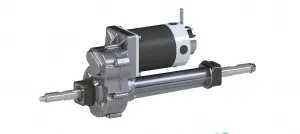
Voltage Rating: The Foundation of Power Matching
Operating voltage is one of the most fundamental specifications of an electric transaxle, which directly determines the supporting battery configuration, overall system compatibility and operational safety. In the mainstream market, low-voltage DC electric transaxles are widely adopted for light-duty mobile equipment, with 24V being the most common standard.
24V electric transaxles are primarily designed for low-load, short-distance operating equipment such as cleaning carts, small trolleys, walk-behind carriers and compact mobility tricycles. This voltage level features stable output, low operational risks and low requirements for battery and circuit accessories, which can effectively reduce the overall procurement and maintenance costs of the entire power system. Besides 24V, there are also products with different voltage levels to cater to higher-load demands. When choosing the voltage, you need to align it with the existing battery pack and circuit design of your equipment. Mismatched voltage will lead to insufficient power output, shortened service life of the motor, or even hidden safety hazards during operation. For equipment that requires long hours of continuous work, sticking to the standard voltage specification can also simplify the later replacement and maintenance of batteries and circuits.
Motor Power: Judge Load Capacity and Working Efficiency
Motor power reflects the continuous driving capacity of the electric transaxle, and it is the core indicator to distinguish applicable equipment types. The power of mainstream low-voltage electric transaxles covers a wide range from 300W to 2200W, and each power segment corresponds to clear application boundaries.
Low-power models ranging from 300W to 500W are suitable for light-load equipment with low travel resistance, such as small strollers, miniature cleaning vehicles and hand-push transport tools. These transaxles focus on energy saving and low noise, fully meeting the demand for slow-speed and short-distance travel. The 800W to 1000W power range is the most versatile choice, widely used in standard trolleys, general cleaning equipment and small electric tractors. They strike a balance between power consumption and load capacity, adapting to most conventional light industrial and commercial scenarios. High-power products of 1500W and above, including 2200W models, are designed for medium-load equipment such as small electric tractors and heavy-duty mobile machinery. They can cope with complex road conditions and frequent start-stop operations, delivering stronger climbing performance and load-bearing capacity.
It is worth noting that over-configuring power will cause unnecessary energy waste and cost increase, while under-configuring power will result in long-term overload operation of the transaxle, accelerating component wear and reducing service life. You can select the appropriate power specification according to the maximum load and daily working intensity of the equipment.
Output Torque: Core Performance for Climbing and Load Bearing
Torque represents the rotational driving force of the electric transaxle, which directly decides the equipment’s starting performance, climbing ability and heavy-load carrying capacity. For mobile equipment that needs to start frequently or run on slopes, torque is even more important than power.
Take the common 1.5KW electric transaxle as an example, its matched rated torque reaches 16Nm, which can provide strong instantaneous driving force. When the equipment is fully loaded or travels on ramps, sufficient torque can avoid the problems of difficult starting, slow speed or motor stalling. Different gear structures will also affect the torque output of the transaxle. Optimized gear deceleration design can amplify torque while ensuring stable transmission. When evaluating torque specifications, you need to combine the actual use environment: flat road and light-load scenarios have low requirements for torque; while venues such as warehouses, farms and scenic spots with slopes and uneven roads must prioritize high-torque products. Reasonable torque matching can not only improve the operating efficiency of the equipment, but also reduce the fatigue loss of internal gears and motors.
Gear and Transmission Structure: Decide Stability and Service Life
The built-in gear system is the key component for the electric transaxle to realize deceleration and torque increase, and its structural design and process determine the overall transmission efficiency, operating noise and long-term stability. Most conventional electric transaxles adopt integrated deceleration gear sets, featuring a compact overall structure and easy installation.
High-quality transaxles use precision-machined gears, which have tight meshing gaps, low operating noise and high transmission efficiency, and can maintain stable performance after long-term continuous operation. The integrated structure effectively reduces the number of external connecting parts, lowers the failure rate of the transmission system, and also simplifies the assembly work of the complete equipment. Some optimized models adopt a sealed gear cavity design, which can effectively isolate dust, water and debris, adapting to harsh working environments such as outdoor sites and cleaning operations. When checking the transmission-related specifications, you can focus on the overall structural tightness and sealing performance of the transaxle. Products with good sealing can greatly extend the service cycle and reduce the frequency of daily maintenance.
Application Adaptability: Matching Scenarios to Avoid Selection Mistakes
Each specification parameter of the electric transaxle ultimately serves the actual application scenario. Different power, voltage and torque combinations correspond to targeted application fields, which is a key reference point for procurement and selection.
- 300W-500W 24V low-power transaxles: Preferred for small strollers, miniature cleaning vehicles and indoor light trolleys, featuring energy saving and flexibility.
- 800W-1000W 24V standard transaxles: The mainstream choice for general transport trolleys, daily cleaning equipment and light mobile tools, with wide adaptability.
- 1500W-2200W 24V high-power high-torque transaxles: Suitable for small electric tractors, outdoor heavy-duty trolleys and three-wheel mobile equipment, adapting to complex road conditions and heavy-load work.
All the above products adopt a highly integrated transaxle design, integrating the motor, deceleration mechanism and axle. This one-piece structure saves the internal space of the equipment, simplifies the overall wiring and assembly, and is favored by most equipment manufacturers. When purchasing, you can classify and screen products according to your main application scenarios to ensure that the specifications are fully matched.
Durability and After-sales Adaptation: Hidden Points for Long-term Procurement
In addition to the explicit parameter specifications, the comprehensive performance related to durability and after-sales maintenance is also an important part of evaluating electric transaxles. Mature electric transaxle products undergo long-term market verification, with stable component quality and consistent batch performance, which is very important for bulk procurement.
The standardized design of mainstream models ensures the versatility of accessories. In the later use process, the replacement of wearing parts is convenient and the cost is controllable. Meanwhile, the integrated structure reduces complex mechanical failures, and routine maintenance only needs to check the circuit and sealing parts. For bulk purchasers and equipment manufacturers, products with high standardization and good maintainability can effectively reduce the overall operating cost of the supply chain and avoid production delays caused by difficult accessory matching.
Final Tips for Specification Selection
- Prioritize the voltage first: Take the existing battery and circuit system of the equipment as the benchmark, and do not arbitrarily replace transaxles with different voltage specifications.
- Select power by load: Light-load and short-distance equipment chooses low-power models; medium and heavy-load, frequent start-stop or climbing scenarios select medium and high-power matched products.
- Focus on torque for complex working conditions: If the equipment often runs on slopes and rough roads, give priority to high-torque transaxles to ensure driving power.
- Match the structure with the environment: For outdoor, dusty and watery working environments, select products with good sealing and integrated structure.
A clear understanding of the above key specifications can help you quickly filter out unqualified products in the procurement process, accurately locate the electric transaxle that meets the equipment demands, and lay a solid foundation for the stable operation of finished equipment.
FAQ
Q1: Can a 24V electric transaxle be used with batteries of different voltages?
A: It is not recommended. Mismatched voltage will lead to abnormal motor operation, increased heat generation, and even burn out the motor in severe cases. Please always use it with the matched voltage battery.
A: It is not recommended. Mismatched voltage will lead to abnormal motor operation, increased heat generation, and even burn out the motor in severe cases. Please always use it with the matched voltage battery.
Q2: What is the main difference between 1000W and 1500W electric transaxles?
A: The 1500W model has higher power and greater output torque, with stronger load-bearing and climbing capacity, and is suitable for heavier loads and harsher working conditions; the 1000W model is more energy-saving and cost-effective for conventional light-load scenarios.
A: The 1500W model has higher power and greater output torque, with stronger load-bearing and climbing capacity, and is suitable for heavier loads and harsher working conditions; the 1000W model is more energy-saving and cost-effective for conventional light-load scenarios.
Q3: Do integrated electric transaxles require regular gear oil maintenance?
A: Most sealed integrated transaxles adopt a lifelong lubrication design, and daily maintenance only needs to check the sealing and circuit status, with no need for frequent replacement of gear oil.
A: Most sealed integrated transaxles adopt a lifelong lubrication design, and daily maintenance only needs to check the sealing and circuit status, with no need for frequent replacement of gear oil.
Post time: Jun-12-2026