

Key Specifications of Electric Transaxles Explained
Introduction
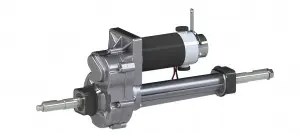
Electric transaxles serve as the fully integrated power core for light electric mobility equipment, combining DC motors, reduction gearboxes, differential assemblies and mounting frames into a single compact unit. For OEM engineers, equipment procurement managers and system integrators, sorting out core technical specifications is the foundation of matching a suitable drive solution for trolleys, cleaning vehicles, electric tractors, three-wheel mobility carriers and industrial service carts.
Many buyers encounter common pain points during sourcing: mismatched voltage causing power attenuation, insufficient torque leading to climbing failure, improper gear ratios cutting vehicle range, or poor structural compatibility delaying assembly cycles. This guide breaks down every critical specification dimension of electric transaxles from a buyer’s practical perspective, clarifying how each parameter impacts vehicle performance, operating costs and long-term reliability.
This article covers all must-evaluate metrics, including electrical parameters, mechanical output indicators, structural design specs, efficiency and environmental tolerance, to help you make data-driven procurement decisions without relying on vague manufacturer descriptions.
1. Core Electrical Specifications
Electrical parameters determine the basic power supply matching and continuous operating capacity of the transaxle motor, which directly aligns with your battery pack configuration.
1.1 Rated DC Voltage
The mainstream voltage grades for light-duty electric transaxles are 24V, 36V and 48V, with low-power miniature models available in 12V. Voltage selection is bound to the battery system:
- 24V transaxles: Matched to small cleaning carts, baby strollers and lightweight transport trolleys with low load demands; low battery cost and simple circuit layout.
- 48V transaxles: Preferred for electric tractors, heavy washing vehicles and three-wheel mobility carriers that carry heavy loads or require frequent hill climbing; delivers stable high torque under sustained heavy loads.
A critical procurement reminder: Do not operate a 24V transaxle with a 48V battery pack. Excess voltage will burn motor windings within short run times, while under-voltage operation leads to slow acceleration, overheating and shortened service life.
1.2 Rated & Peak Power
Power reflects the electric energy conversion capacity of the motor, divided into continuous rated power and instantaneous peak power:
- Rated power: Represents stable long-hour operating power, covering daily flat-ground travel and low-load cruising. Common specifications range from 300W, 400W, 500W, 800W, 1000W up to 2200W for heavy-duty models.
- Peak power: Short burst power output for acceleration, slope climbing or overloading, typically lasting 10–30 seconds. It is the key indicator for judging the vehicle’s climbing performance.
When sourcing, match rated power to standard daily working loads and use peak power as the benchmark for maximum instantaneous load scenarios. Avoid over-specifying high-power units, which increase battery consumption and raise overall vehicle manufacturing costs unnecessarily.
1.3 Rated Current & Overcurrent Protection Threshold
Rated current defines the steady-state current draw under nominal load, while the overcurrent threshold acts as the motor’s safety limit. Integrated transaxles with built-in controller modules feature preset overcurrent protection to cut power automatically when overload occurs, preventing winding burnout during sudden stalls or steep climbs.
For fleet operators with dozens of units, prioritize transaxles with adjustable overcurrent thresholds. This allows fine-tuning based on local road conditions and load limits to reduce unexpected downtime.
2. Torque & Speed Mechanical Output Metrics
Torque and rotational speed are the most decisive specifications for vehicle dynamic performance, and buyers often confuse motor input speed with wheel output speed.
2.1 Rated Output Torque
Output torque is the amplified torque delivered to drive wheels after gear reduction, measured in Nm. It governs load capacity and climbing ability:
- 3–8Nm: Small strollers, light cleaning carts with loads under 100kg
- 10–20Nm: General transport trolleys, compact washing vehicles
- 25Nm and above: Electric tractors, heavy industrial carriers and mobility trikes
Low-torque transaxles will stall on gradients exceeding 5–8 degrees even with light cargo. If your application involves regular ramp access, select a model with 30% higher rated torque than your maximum load calculation as a safety buffer.
2.2 Gear Reduction Ratio
The reduction ratio is the core mechanical parameter that balances torque and top speed. It describes how many times the motor rotation is slowed down to multiply wheel torque.
- High reduction ratios (12:1 to 16:1): Boost low-speed torque for heavy loads and steep slopes, suitable for tractors and cargo trikes; limited maximum travel speed.
- Low reduction ratios (6:1 to 10:1): Enable higher flat-ground cruising speeds, ideal for light cleaning vehicles and small transport carts with flat route operation.
Most suppliers offer customizable gear ratios for bulk orders, which is a valuable customization option for OEMs with specialized vehicle speed and torque requirements.
2.3 Maximum Motor Input Speed & Wheel Speed
Motor maximum input speed ranges from 3000rpm to 5000rpm for standard DC transaxles. After reduction, wheel output speed translates directly to vehicle travel speed. When evaluating samples, calculate theoretical maximum speed based on tire diameter and reduction ratio to verify alignment with your vehicle design targets.
3. Structural & Dimensional Specifications
Structural specs determine assembly compatibility with your vehicle chassis, frame space layout and wheel mounting design.
3.1 Overall Layout Form
Three mainstream layouts are widely adopted across light mobility transaxles:
- Parallel-axis layout: Compact width, easy to install on narrow-frame trolleys and cleaning machines; balanced load distribution for small vehicles.
- Coaxial layout: Motor aligned with output axle, symmetrical wheel mounting, perfect for three-wheel mobility carriers with centered frame design.
- T-type vertical layout: Motor perpendicular to drive axle, maximizes ground clearance, favored by tractors and off-road light electric vehicles.
Confirm chassis internal space constraints before finalizing layout type to avoid costly frame redesigns post-procurement.
3.2 Mounting Dimensions & Shaft Interface
Key dimensional data to collect from suppliers: overall length/width/height of the transaxle housing, mounting hole spacing, output axle diameter, axle extension length and flange connection standards.
Customizable shaft lengths and spline interfaces are standard for bulk OEM orders, enabling seamless matching with wheel hubs, brake assemblies and wheel hubs without additional mechanical adapters.
3.3 Housing Material & Weight
Most commercial transaxles use die-cast aluminum alloy housings, delivering two core advantages: lightweight design to reduce overall vehicle curb weight and excellent heat dissipation to stabilize motor operating temperature during continuous use. Low-cost cast iron housings offer higher impact resistance but add significant vehicle weight, shortening battery range for battery-powered equipment.
Standard unit weights span 6kg (300W small models) to 22kg (2200W heavy-duty tractor transaxles). Weight control is a critical specification for battery-powered equipment targeting extended runtime.
4. Efficiency, Noise & Durability Specifications
These long-term operation indicators determine total cost of ownership for fleet buyers and end-user satisfaction.
4.1 Transmission Efficiency
High-quality integrated transaxles with precision ground helical gears achieve total system efficiency above 92% under rated load. Worn straight-cut gears or loose assembly tolerance drop efficiency below 85%, which translates to higher battery power consumption and shorter daily operating range.
For rental fleets and commercial cleaning service operators, prioritize units with certified efficiency data to cut daily battery charging costs across hundreds of vehicles.
4.2 Operating Noise Level
Noise ratings are measured at 1-meter distance under rated load:
- Premium low-noise models: ≤62dB, suitable for indoor shopping mall trolleys, hospital mobility carriers and hotel cleaning vehicles.
- Standard industrial models: 65–72dB, acceptable for outdoor tractors and warehouse transport carts.
Helical gear structures deliver far quieter operation than spur gear alternatives, a key specification for equipment intended for indoor commercial environments with strict noise regulations.
4.3 Lubrication & Maintenance Cycle
Two mainstream lubrication systems: splash lubrication (mainstream standard, no external oil pump, simple maintenance) and forced oil circulation (for continuous high-load 24-hour operation equipment). Standard maintenance intervals range from 800 to 1500 operating hours for gear oil replacement. Suppliers offering long-life synthetic gear oil options reduce routine maintenance labor costs for large equipment fleets.
5. Environmental & Protection Grade Specifications
IP protection grade defines the transaxle’s adaptability to harsh working environments, a non-negotiable spec for outdoor, wet or dusty applications.
- IP54: Dust-resistant and splash-proof, suitable for indoor warehouses and dry cleaning equipment.
- IP65: Full dust protection and resistance to high-pressure water spray, mandatory for car washing machines, outdoor tractors and all-weather mobility trikes.
Additional environmental tolerance parameters to review: operating temperature range (-10°C to +60°C for standard units), corrosion resistance of housing surface coating, and sealing performance of motor and gearbox joints. Units deployed in coastal high-humidity regions require enhanced anti-rust surface treatment specifications.
6. Application Matching Guide by Key Spec Combinations
This quick reference table helps buyers cross-reference core parameters with target equipment types for faster screening during supplier quotation evaluation:
表格
| Equipment Type | Typical Voltage | Rated Power | Rated Output Torque | Recommended Reduction Ratio | IP Grade |
|---|---|---|---|---|---|
| Baby stroller / Small service cart | 24V | 300W–500W | 3–10Nm | 14:1–16:1 | IP54 |
| Indoor floor cleaning machine | 24V | 400W–800W | 8–15Nm | 10:1–12:1 | IP65 |
| Warehouse transport trolley | 24V/48V | 800W–1000W | 12–20Nm | 9:1–11:1 | IP54 |
| Electric mobility three-wheeler | 48V | 1000W–1500W | 18–28Nm | 12:1–14:1 | IP65 |
| Small electric farm tractor | 48V | 1500W–2200W | 25–40Nm | 13:1–16:1 | IP65 |
7. Frequently Asked Spec Questions for Buyers
Q1: Can I swap transaxles with different voltage grades on the same vehicle frame?
A: Frame mounting dimensions may match, but the motor winding and built-in controller are calibrated for a fixed voltage. Cross-voltage replacement causes power loss, overheating or permanent motor damage, so voltage must stay consistent with the original battery system.
Q2: Does higher torque always mean better performance?
A: Excessively high torque paired with a large reduction ratio caps maximum travel speed and increases energy consumption. Match torque strictly to your maximum load and gradient requirements instead of over-specifying blindly.
Q3: What spec adjustments are available for OEM bulk orders?
A: Most manufacturers support custom reduction ratios, output axle lengths, mounting hole layouts, controller parameter tuning and IP grade upgrades for volume orders above minimum order quantities. Share full vehicle chassis drawings and working condition parameters to receive tailored spec quotations.
Q4: How to verify if a supplier’s torque and efficiency data is accurate?
A: Request third-party laboratory performance test reports covering torque output curve, efficiency under variable loads and noise testing data. Reliable industrial suppliers provide standardized test documentation for all core transaxle models.
Conclusion
Every specification of an electric transaxle interconnects to shape vehicle power performance, operating cost and service life. Procurement teams and design engineers should sort electrical power, torque-speed output, structural dimensional, efficiency and environmental protection specs in sequence when screening suppliers, instead of only comparing price or power labels superficially.
By aligning each technical parameter with your equipment’s load, travel speed, working environment and chassis layout demands, you can select a balanced electric transaxle solution that balances performance, durability and total operational cost. For customized mobility equipment projects, share full working condition and dimensional requirements with suppliers to obtain fully matched spec solutions rather than modifying off-the-shelf standard units.
Post time: Jun-24-2026