

Electric Transaxle Power Selection Guide for Automated Cleaning Equipment
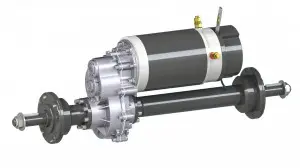
In the realms of industrial cleaning, commercial janitorial services, and smart cleaning applications, the Electric Transaxle serves as the core power source for automated cleaning equipment. Consequently, the selection of its power output directly determines the equipment’s operational efficiency, battery endurance, and service life. Under-sizing the power output can result in insufficient motive force, limiting the equipment’s climbing and load-bearing capabilities; conversely, over-sizing it leads to energy waste and increased costs, while potential power redundancy may even compromise the equipment’s operational stability. Drawing upon global application scenarios and technical standards for cleaning equipment, this article presents a scientific framework for selecting the appropriate Electric Transaxle power output for automated cleaning devices. This framework is structured around three core dimensions—equipment type, operational environment, and load requirements—while simultaneously balancing the dual imperatives of power matching and energy efficiency optimization.
I. Determining Base Power Output Based on Cleaning Equipment Type: From Micro-Intelligent Devices to Large-Scale Industrial Cleaning Vehicles
Different types of automated cleaning equipment—owing to variations in operational functions, body weight, and cleaning efficiency requirements—exhibit distinct power demands for their Electric Transaxles. With 24V DC power supply serving as the prevailing voltage standard for cleaning equipment, the corresponding power selection for Electric Transaxles has converged into a set of industry-standard ranges. The following provides key power matching recommendations for various types of equipment:
Micro-Intelligent Cleaning Robots (Robotic Vacuums / Desktop Cleaners)
These devices prioritize lightweight design and miniaturization, primarily serving small-area environments such as homes and offices. Their body weight typically falls within 5 kg; as they require no climbing or heavy load-bearing capabilities, they merely need to generate sufficient power for basic mobility and cleaning functions.
Recommended Power: Electric Transaxles rated at 300W or less. This low-power configuration ensures minimal energy consumption and extended battery life, while also fitting within the equipment’s compact installation space and meeting requirements for quiet operation.
Small-Scale Automated Cleaning Equipment (Walk-Behind Floor Scrubbers / Small Sweepers)
Widely deployed in environments such as supermarkets, office buildings, and small warehouses, these devices typically weigh between 10 and 50 kg. They are required to drive core cleaning modules—such as brush decks and vacuum suction systems—and, in certain scenarios, must be capable of navigating slight inclines (≤5°). **Compatible Power Range: 400W–800W Electric Transaxle. This power range strikes an optimal balance between power output and energy consumption, meeting the equipment’s requirement for 2–4 hours of continuous operation while remaining compatible with standard 24V DC battery configurations.
Medium-Sized Commercial Cleaning Equipment (Ride-on Floor Scrubbers / Medium-sized Sweepers)
Suitable for medium-to-large-scale environments such as large supermarkets, logistics warehouses, and industrial parks. These units typically weigh between 50 kg and 200 kg and are equipped with multiple brush decks and high-capacity wastewater tanks. They must be capable of handling complex floor surfaces (e.g., tiles, concrete) and moderate inclines (5°–10°); furthermore, some units require simultaneous power delivery to both the mobility and cleaning modules.
Compatible Power Range:** 800W–1500W Electric Transaxle. This higher power output provides ample torque, ensuring the equipment maintains its travel speed and cleaning efficiency even under heavy loads. It is compatible with dual-voltage 24V/36V configurations, enabling 4–6 hours of continuous operation.
Large-Scale Industrial Cleaning Equipment (Industrial Floor Scrubbers / Municipal Sweepers / High-Pressure Washers)
Primarily designed for heavy-industry and outdoor environments—such as ports, mines, large logistics hubs, and urban roadways. These units weigh in excess of 200 kg; some integrate specialized modules such as high-pressure washing systems or heavy-duty sweeping brushes. They must contend with complex operating conditions—including steep inclines (10°–15°), gravel surfaces, and heavy soiling—and therefore demand extremely high load-bearing capabilities.
Compatible Power Range: 1500W–2200W (and above) Electric Transaxle. This high power output delivers robust climbing capability and load-carrying thrust. It must be paired with an optimized gear reduction ratio design to ensure sufficient torque output during low-speed travel, thereby meeting the demands of high-intensity industrial operations lasting 8 hours or more.
II. Adjusting Power Output Based on Operating Scenarios: Operating Conditions Are the Key Variable in Power Selection
The “base power” rating serves merely as a preliminary reference for selection. In actual application, the specific operating environment of the cleaning equipment directly influences the actual load placed upon the Electric Transaxle. Consequently, the base power rating must be fine-tuned based on four critical factors: floor surface material, incline/slope, cleaning area size, and type of soiling. This meticulous adjustment process is essential to prevent equipment malfunctions caused by a “mismatch between power output and operating conditions.” Floor Surface and Resistance: Smooth Surfaces Reduce Power Needs; Rough Surfaces Increase Them
Smooth, Hard Surfaces (Tiles, Epoxy Flooring, Terrazzo):These surfaces present low frictional resistance; consequently, power loss during equipment travel and operation is minimal. Power requirements can be reduced by 10%–20% relative to the baseline power rating, thereby lowering energy consumption.
Rough Surfaces (Concrete, Asphalt, Gravel):** These surfaces generate high frictional resistance and are prone to tire slippage. Power requirements must be increased by 20%–30% relative to the baseline rating to ensure equipment stability during travel and to prevent damage to the electric drive axle caused by overload operation.
Operating Gradient: Steeper Slopes Demand Higher Power
When cleaning equipment operates on ramps or inclines, the electric drive axle must overcome the dual resistance of gravity and friction. For every 5° increase in gradient, the demand for torque rises significantly, thereby necessitating greater power support:
Flat Surfaces (No Gradient): Selection based on the baseline power rating is sufficient.
Moderate Slopes (5°–10°): Increase the baseline power rating by 15%–25%.
Steep Slopes (10°–15°):** Increase the baseline power rating by 30%–50%. Additionally, prioritize selecting an electric transaxle with a high reduction ratio to enhance torque output efficiency.
Cleaning Area and Operational Efficiency: Large Areas Prioritize High Power
Small Areas (≤ 500 m²):** Such as offices or small retail shops. Equipment operating speeds are low, and start-stop cycles are infrequent; therefore, the baseline power rating is sufficient to meet requirements.
Medium Areas (500 m² – 5,000 m²): Such as supermarkets or medium-sized warehouses. These environments require higher equipment operating speeds; thus, selecting an electric transaxle at the upper limit of the baseline power range is recommended.
Large Areas (≥ 5,000 m²): Such as industrial parks or urban roadways. Equipment must travel and clean at high speeds for extended periods; therefore, it is mandatory to select an electric transaxle within the high-power range, paired with a high-capacity battery to ensure both operational endurance and efficiency. Dirt Type: Heavy-Duty Scenarios Require Power Redundancy
Light Dirt (Floating dust, fine debris): The cleaning module imposes a low load; the electric transaxle merely needs to provide propulsion for movement, so standard base power is sufficient.
Heavy Dirt (Oil stains, caked cement, metal shavings, thick mud/sand): The cleaning module (e.g., high-pressure brush discs, suction pumps) requires high-power operation. This draws power away from the electric transaxle; therefore, the power output must be increased by 20%–30% above the base level to ensure sufficient power redundancy and prevent the equipment from becoming underpowered.
III. Three Core Principles for Power Selection: Avoid Pitfalls, Balance Practicality with Economy
Principle 1: Prioritize Torque over Solely Pursuing High Power
The primary function of an electric transaxle is to provide propulsion for the equipment; torque determines the equipment’s ability to climb inclines, carry loads, and accelerate from a standstill, whereas power represents the combined product of torque and rotational speed. While some cleaning equipment (such as industrial sweepers) does not require high travel speeds, it demands extremely high torque. In such cases, one should select an electric transaxle characterized by “low speed, high torque, and appropriate power output,” rather than blindly opting for a high-power product. For instance, a 24V 800W electric transaxle with a high reduction ratio may deliver superior torque output compared to a standard 24V 1000W unit with a normal reduction ratio, making it better suited for scenarios involving inclines and heavy loads.
Principle 2: Match the Equipment’s Overall Energy Consumption to Avoid Excessive Power Redundancy
Automated cleaning equipment is typically fully electric-driven, meaning battery capacity dictates its operational endurance. If the electric transaxle’s power output is excessive, it accelerates the battery’s discharge rate, significantly reducing the equipment’s runtime while simultaneously increasing both manufacturing and maintenance costs. When selecting a transaxle, it is essential to calculate energy consumption based on the equipment’s battery capacity, the power requirements of the cleaning module, and the intended operating duration. This ensures that the electric transaxle’s power output is appropriately matched to the equipment’s overall energy profile, thereby achieving a balance where “power is sufficient, and energy consumption is optimized.” Principle 3: Prioritize Installation Compatibility and Adaptability, While Considering Future Maintenance Needs
Electric transaxles of varying power ratings differ in terms of physical dimensions, mounting specifications, and reduction ratios. Consequently, during the selection process, it is essential to carefully assess the available installation space within the equipment to prevent integration issues caused by selecting a transaxle that is physically too large. Furthermore, priority should be given to products featuring standardized and modular designs; this approach simplifies future replacement and maintenance procedures, thereby ensuring the long-term, stable operation of the equipment.
IV. Supplementary Recommendations for Power Selection: Key Considerations for Translating Operational Scenarios into Product Specifications
Prioritize Electric Transaxles with Wide Voltage Compatibility: Products capable of operating across a wide voltage range (e.g., 24V/36V/48V) offer the flexibility to seamlessly integrate with the diverse battery configurations found in various cleaning machines. Should there be a future need to boost the equipment’s power output, this can often be achieved simply by upgrading the operating voltage, thereby eliminating the need to replace the entire electric transaxle unit.
Consider the Equipment’s Multifunctional Integration: If the cleaning equipment incorporates multiple functions—such as high-pressure washing, disinfection, or waste suction—it is crucial to reserve sufficient power capacity for these additional functional modules to prevent overall power deficits.
Reference Industry-Standard Compatibility Benchmarks: Within the global cleaning equipment industry, 24V DC-powered electric transaxles are considered the universal standard. The 400W to 1500W power range covers over 80% of all commercial and light-industrial cleaning equipment applications; therefore, prioritizing products within this standard range during selection helps ensure maximum product versatility and compatibility.
Select an Appropriate Protection Rating Based on the Operating Environment: For outdoor, humid, or dusty environments (e.g., municipal street cleaning or mining operations), it is imperative to select an electric transaxle with a high Ingress Protection (IP) rating (IP54 or higher). This prevents dust and moisture ingress, which can lead to equipment failure. Additionally, when selecting a power rating, it is advisable to build in a moderate power redundancy to compensate for potential power losses or performance degradation associated with operating in harsh conditions.
Conclusion
Selecting the appropriate power rating for the electric transaxles used in automated cleaning equipment is not a matter of simply assuming that “more power is always better.” Rather, it is a comprehensive decision-making process grounded in the specific type of equipment, centered on the operational scenario, and guided by key principles regarding torque requirements, energy efficiency, and system compatibility. From the sub-300W requirements of miniature intelligent robots to the 2200W-plus demands of heavy-duty industrial cleaning vehicles, different power ranges correspond to distinct application needs. Only by achieving a “precise match between power output and operating conditions” can cleaning equipment simultaneously maximize operational efficiency while optimizing energy consumption and extending service life.
Post time: Mar-25-2026