

Electric Transaxle for Off-road Vehicles: A Complete Guide to Performance, Selection & Application
Off-road vehicles face extremely complex terrain challenges, from rugged mountain trails and muddy wetlands to gravel roads and steep slopes. As the global mobility industry shifts toward electrification, electric transaxles have become the core component that defines the overall performance, reliability and adaptability of modern electric off-road vehicles. Unlike traditional mechanical transmission systems, integrated electric transaxles combine motors, gear assemblies and differential structures into one compact unit, delivering outstanding power output, terrain adaptability and operational efficiency for all types of off-road equipment. This guide dives deep into the core strengths, key specifications, applicable scenarios, selection criteria and maintenance tips of electric transaxles for off-road use, helping industry buyers, equipment manufacturers and technical practitioners make informed decisions.
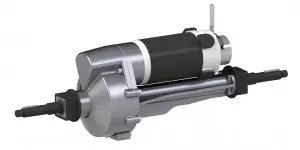
What Makes Electric Transaxles Stand Out for Off-road Use
Traditional fuel-powered off-road vehicles rely on complex engines, clutches, drive shafts and multi-stage gearboxes to transmit power. The long mechanical transmission chain leads to large power loss, high failure rates and cumbersome maintenance work. Electric transaxles completely restructure the power transmission logic and bring multiple inherent advantages tailored for off-road working conditions.
First of all, instant high torque output is the most prominent feature. Electric motors can generate maximum torque the moment they start running, which perfectly matches the demand for strong traction when off-road vehicles start, climb slopes or get out of trouble. On steep hills or sticky muddy roads, vehicles equipped with electric transaxles do not need frequent gear shifting or throttle adjustment. The stable and continuous torque output effectively prevents wheel slipping and power interruption, greatly improving the vehicle’s passing ability on harsh terrain.
Secondly, the integrated structure realizes space optimization and weight control. The electric transaxle integrates the drive motor, reduction gear set and differential into a single assembly, eliminating a large number of discrete mechanical parts such as drive shafts and intermediate bearings. For off-road vehicles with limited chassis space, this design frees up more room for battery packs, suspension systems and cargo space. Meanwhile, the streamlined structure reduces the overall body weight, further enhancing load-bearing capacity and driving flexibility.
In terms of operational experience and environmental performance, electric transaxles run smoothly with low vibration and low noise. When driving in remote mountain areas, forest areas and other off-road scenes, low-noise operation will not cause excessive noise disturbance. Besides, pure electric drive produces no exhaust emissions, complying with the increasingly strict environmental protection regulations in various regions, and is suitable for eco-tourism scenic spots, forest protection operations and other scenarios with high environmental requirements.
In addition, the simplified mechanical structure cuts down failure points significantly. Traditional transmission systems have dozens of wearable parts, which are prone to faults such as gear wear and shaft jamming under long-term bumpy and high-load working conditions. The electric transaxle has fewer moving parts, stable overall operation and lower daily failure probability, effectively reducing downtime caused by equipment faults.
Core Technical Parameters to Focus on When Choosing Off-road Electric Transaxles
For bulk buyers and equipment manufacturers, technical parameters are the core basis for evaluating whether an electric transaxle matches the equipment. Different off-road scenarios and vehicle types have distinct parameter requirements. Focus on the following key indicators to avoid mismatched selection.
1. Motor Power & Voltage Configuration
Power directly determines the load capacity and climbing performance of the vehicle. Low-power models ranging from 300W to 1000W are mostly applied to light off-road equipment such as electric trolleys, small sightseeing tricycles and garden off-road vehicles. They are suitable for flat gravel roads and gentle slopes, with flexible operation and low energy consumption.
Medium-power products of 1500W to 2200W are mainstream choices for medium-sized off-road vehicles, widely used in engineering transport vehicles, field patrol cars and medium-load off-road trailers. Such power can cope with continuous bumpy roads and slopes within 30 degrees, balancing power and energy efficiency. High-power configurations above 2200W are aimed at heavy-duty off-road equipment like mining transport vehicles and large field operation vehicles, which need to carry heavy loads and traverse extremely rugged terrain for a long time.
In terms of voltage, 24V is the most common low-voltage specification. It features high safety, low maintenance cost and stable operation, and is the preferred configuration for most light and medium off-road vehicles. Higher voltage specifications can support higher power output and longer continuous driving, which are mostly used for large heavy-duty off-road equipment that runs for a long time.
2. Torque & Gear Reduction Ratio
Torque is a decisive indicator of off-road escape and climbing capability. The greater the torque, the stronger the vehicle’s ability to adapt to complex terrain. When selecting models for muddy roads, deep gullies and steep slopes, priority should be given to products with high torque parameters.
The gear reduction ratio works with torque output. A reasonable reduction ratio can convert the high speed of the motor into strong driving force. For off-road scenarios dominated by low-speed and high-traction work, a larger reduction ratio is configured to ensure sufficient power when the vehicle moves at a low speed. For off-road vehicles that need to take into account both field passing and short-distance fast driving, a moderate reduction ratio is adopted to balance traction and driving speed.
3. Load-bearing Capacity & Structural Durability
Off-road vehicles are often in bumpy and high-vibration environments, so the load-bearing strength and structural durability of the transaxle shell and internal gears are crucial. High-quality off-road electric transaxles adopt high-strength metal shells and precision forged gears, which can resist impact, vibration and extrusion in complex environments and avoid shell cracking or gear tooth breakage.
When inspecting products, pay attention to the overall sealing performance. Off-road scenes are accompanied by dust, sediment and water splashes all year round. Good sealing design can effectively prevent dust, muddy water from entering the interior, and protect motors and gear components from corrosion and abrasion, thus extending the service life of the whole set of parts.
Main Application Scenarios of Off-road Electric Transaxles
Thanks to flexible power matching and strong environmental adaptability, electric transaxles have covered almost all categories of electric off-road vehicles and equipment, with clear targeted applications in different fields.
1. Field & Garden Off-road Equipment
Small electric tricycles, garden transport vehicles and lawn maintenance vehicles often work on uneven lawns, dirt roads and forest paths. Light-duty 24V low-power electric transaxles are widely used in such equipment. They are flexible in steering, easy to operate and low in noise, meeting the daily operation needs of parks, manors and forest farms.
2. Scenic Spot Sightseeing & Patrol Vehicles
Eco-tourism scenic spots, wetland parks and mountain scenic spots have put forward strict requirements for environmental protection and noise control. Medium-power electric transaxles are matched with off-road sightseeing vehicles and patrol cars. They can stably run on mountain winding roads and gravel roads, with zero emissions and low noise, which not only ensures the riding experience but also maintains the ecological environment of the scenic spots.
3. Engineering & Mining Short-distance Transport
In mining areas, construction sites and remote engineering sites, the road conditions are harsh with many rocks and steep slopes. Medium and high-power heavy-duty electric transaxles become the core power of engineering off-road transport vehicles. Their strong load-bearing capacity and high torque can adapt to heavy-load transportation and long-distance climbing operations, and the stable structure can withstand the severe test of the complex working environment on the construction site.
4. Special Mobility Off-road Vehicles
Off-road wheelchairs, field exploration vehicles and rescue vehicles have extremely high requirements for equipment reliability and passing performance. Customized electric transaxle products are adopted in such equipment. Through optimized torque distribution and anti-slip design, the vehicles can safely pass through potholes, steps and rugged roads, providing reliable power support for special operations and travel.
Key Points for Purchasing & Cooperation
For professional buyers and equipment manufacturers, besides technical parameters and application scenarios, the following factors need to be comprehensively considered in the procurement process to ensure long-term stable cooperation and product use.
First, verify product consistency and batch stability. Mass-produced off-road vehicles require all accessories to maintain consistent performance. Choose manufacturers with complete supply chain systems and standardized production processes to ensure that the parameters, workmanship and durability of each batch of electric transaxles remain stable, and avoid equipment failures caused by inconsistent product quality.
Second, focus on product compatibility and customization capability. Different brands and models of off-road vehicles have differences in chassis size, installation interface and circuit matching. Excellent suppliers can provide conventional standard products and also support personalized customization according to the drawings, size requirements and power demands of buyers, to realize seamless matching with various types of off-road equipment.
Third, evaluate after-sales service and technical support. Off-road equipment often works in remote areas, and on-site maintenance is inconvenient. Suppliers with thoughtful after-sales service can provide remote technical guidance and quick accessory replacement services. A sound after-sales system can greatly reduce the maintenance cost and equipment downtime for buyers in the later stage.
Fourth, balance cost performance and quality. While controlling the procurement cost, do not blindly pursue low prices. Inferior electric transaxles have problems such as insufficient torque, poor sealing and easy wear, which will lead to frequent failures of the whole vehicle and increase the comprehensive use cost in the later period. It is the most cost-effective choice to select products that meet the working condition requirements, with reliable quality and reasonable pricing.
Daily Maintenance Tips to Extend Service Life
Good daily maintenance can maximize the service life of electric transaxles and keep the off-road vehicles in the best running state. Combined with the harsh working characteristics of off-road environments, the maintenance work can be carried out from the following aspects.
Clean the exterior regularly. After each use in muddy, dusty and sandy environments, clean the sediment, dust and debris on the surface of the transaxle, especially the heat dissipation part and sealing gap. Long-term accumulation of dirt will affect heat dissipation and may wear the sealing structure, leading to water and dust ingress.
Check the sealing and fastening parts regularly. Frequently inspect the shell joints, wiring ports and fixing bolts. In the vibration environment of off-road driving, bolts are easy to loosen. Timely tightening can prevent parts from falling off and sealing failure. Once oil leakage or water seepage is found, deal with it immediately.
Follow the cycle to replace lubricating grease. The internal gear set of the transaxle relies on lubricating grease to reduce friction and wear. According to the frequency of equipment use and working conditions, replace the special lubricating grease on a regular basis. For vehicles working in high-load and harsh terrain for a long time, the replacement cycle should be appropriately shortened.
Avoid long-term overloaded operation. Although high-power electric transaxles have strong load-bearing capacity, long-term overloading will cause overheating of the motor and excessive wear of gears, which will accelerate the aging of parts. Reasonably control the load and avoid frequent extreme climbing and stuck driving, so as to protect the power system.
Conclusion
As electrification becomes an irreversible trend in the off-road vehicle industry, electric transaxles, as the core power transmission component, determine the core performance of the equipment. From light garden vehicles to heavy engineering transport vehicles, from scenic spot sightseeing to field operation, high-quality electric transaxles can bring stable power, excellent passing performance and lower operating costs to off-road equipment.
When purchasing, buyers need to combine the actual use scenarios, clarify the demands for power, torque, voltage and load-bearing capacity, and select products with stable quality, strong compatibility and perfect after-sales service. With correct model selection and standard daily maintenance, electric transaxles can maintain efficient operation for a long time and create greater value for equipment operation.
Post time: Jun-15-2026