

Electric Transaxle Cost per Unit Explained
For fleet operators, equipment manufacturers, and procurement teams, understanding the unit cost of electric transaxles is critical to budgeting, project planning, and total cost of ownership (TCO) calculations. Unlike standard mechanical components, electric transaxles integrate motor, gearbox, controller, and axle structure into one compact assembly—creating a unique cost structure that depends on design, materials, volume, and performance requirements.
This guide breaks down what determines the per-unit cost of an electric transaxle, how different configurations impact pricing, and how buyers can evaluate cost efficiency without sacrificing reliability.
Table of Contents
- What Is an Electric Transaxle & Why Cost Matters
- Core Components That Drive Unit Cost
- Key Factors That Influence Per-Unit Pricing
- Cost Range by Power & Application Type
- How Volume & Customization Affect Cost
- Tips to Optimize Cost Without Compromising Quality
- FAQ: Common Questions About Electric Transaxle Pricing
What Is an Electric Transaxle & Why Cost Matters
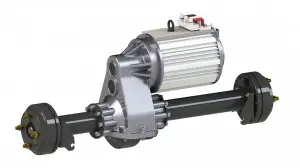
An electric transaxle combines the electric drive motor, transmission, differential, and axle into a single integrated unit. It serves as the main power source for electric utility vehicles, forklifts, sweepers, golf carts, low-speed vehicles, and small industrial machinery.
For buyers, unit cost directly impacts:
- Upfront vehicle or equipment production costs
- Per-unit profitability for finished machines
- Fleet conversion budgets for electrification projects
- Long-term service, maintenance, and replacement planning
A clear understanding of cost drivers helps you avoid overpaying for unneeded features and select the right transaxle for your operational needs.
Core Components That Drive Unit Cost
Every electric transaxle is built from a set of high-precision parts. Below are the primary modules that shape the final price:
| Component | Role in Cost Structure |
|---|---|
| Electric Motor | The largest single cost factor; depends on power rating, material type, and efficiency class. |
| Gearbox & Differential | Precision machining, gear quality, and load capacity affect durability and price. |
| Motor Controller | Drives cost via chip technology, voltage compatibility, and control features. |
| Axle Housing & Structural Parts | Material choice (steel/aluminum), weight capacity, and sealing standards. |
| Sensors & Wiring Harness | Included in integrated models; adds consistency and control function costs. |
| Assembly & Testing | Labor, calibration, load testing, and quality validation per unit. |
Together, these parts determine performance, durability, efficiency, and final unit cost.
Key Factors That Influence Per-Unit Pricing
Many variables affect how much you pay per electric transaxle. Understanding these helps you compare quotes objectively.
1. Power Rating (Wattage)
Higher-power motors require more copper, improved magnetic materials, and stronger gear sets—all of which increase cost.
- Low-power units (300W–800W): Used in light-duty equipment
- Mid-power (1000W–2000W): Most common for utility and industrial devices
- High-power (2200W+): Designed for heavy loads and continuous operation
2. Voltage Platform
Common voltages include 24V, 36V, 48V. Higher-voltage systems often use more advanced controllers and insulation, leading to a mild cost increase but better efficiency.
3. Materials & Durability
- Steel vs. aluminum housing: Aluminum reduces weight but costs more
- Sealing grade: IP54/IP65 waterproofing adds cost for outdoor/industrial use
- Bearing quality: Heavy-duty bearings extend lifespan but raise unit cost
4. Integration Level
- Basic: Motor + gearbox only
- Integrated: Motor + controller + gearbox + wiring harness
Fully integrated units reduce installation labor but have a higher per-unit cost.
5. Quality & Certification
Units tested for continuous operation, noise control, and safety standards carry a small premium but lower long-term failure risk.
6. Production Volume
Per-unit cost drops significantly with higher order quantities due to:
- Material bulk purchasing
- Automated assembly efficiency
- Fixed production cost distribution
Cost Range by Power & Application Type
Below is a general price guide for standardized electric transaxles in global industrial markets. These are approximate unit costs in moderate order volumes.
| Power Range | Typical Applications | Estimated Unit Cost |
|---|---|---|
| 300W–500W | Light sweepers, small carts | Low |
| 800W | Cleaning machines, trolleys | Mid-Low |
| 1000W | Electric tractors, utility vehicles | Mid |
| 1500W–2000W | Industrial movers, forklift systems | Mid-High |
| 2200W+ | Heavy-duty equipment, load carriers | High |
Note: Custom shafts, special ratios, waterproofing, or brand-specific interfaces will shift these ranges upward.
How Volume & Customization Affect Cost
For professional buyers, volume and customization are the two biggest levers to control unit cost.
Order Volume Impact
- Sample / Small batch: Higher per-unit cost due to manual assembly and material handling
- Medium volume: Moderate cost; semi-automated production
- Mass production: Lowest unit cost; full-line efficiency and material discounts
Customization Effect
Common customizations that influence price:
- Special output shaft size or length
- Non-standard gear ratios
- Custom mounting brackets or flange design
- Modified speed or torque settings
- Custom wiring connectors or plug types
Minor modifications may add only a small cost, while full engineering customization can significantly increase per-unit expense.
Tips to Optimize Cost Without Compromising Quality
Buyers can lower effective unit cost while maintaining performance and reliability:
-
Choose standard models first
Standard electric transaxles benefit from mature production and lower costs compared to custom designs.
-
Match power to actual usage
Avoid over-specifying wattage. A properly sized motor reduces cost and improves efficiency.
-
Consolidate part numbers
Using one transaxle model across multiple machine lines lowers total cost through higher volume.
-
Prioritize integrated units for assembly savings
Although the unit cost is slightly higher, integrated motor-controller-transaxle packages reduce labor, wiring, and failure points.
-
Evaluate total cost of ownership
A slightly more expensive unit with better bearings, sealing, and efficiency often delivers lower long-term cost.
-
Plan orders ahead
Lead-time planning allows manufacturers to optimize material purchasing and production scheduling.
FAQ: Common Questions About Electric Transaxle Pricing
What is the single biggest factor in electric transaxle cost?
The electric motor and its material quality typically represent the largest portion of unit cost, followed by the gear system and controller.
Do higher-cost units always perform better?
Not always. Many premium features are application-specific. A mid-range unit designed for your duty cycle often outperforms an over-spec’d expensive unit in real use.
How much can I save by increasing order volume?
In mass production, per-unit cost can decrease noticeably due to economies of scale, automated efficiency, and bulk material sourcing.
Is it cheaper to buy motor and transaxle separately?
For small volumes, separate parts may seem cheaper, but integrated units reduce assembly time, wiring complexity, and compatibility risks—lowering total system cost.
How do waterproofing and durability affect cost?
Industrial-grade sealing and heavy-duty components add moderate cost but greatly extend service life in wet, dusty, or high-load environments.
Conclusion
The unit cost of an electric transaxle is shaped by power, materials, integration, volume, and customization. For procurement and engineering teams, the goal is not simply to find the lowest price, but to select a unit that balances upfront cost, efficiency, durability, and total cost of ownership.
By understanding the core cost drivers covered in this guide, you can compare suppliers more effectively, negotiate confidently, and select the ideal electric transaxle for your equipment or fleet.
Post time: May-15-2026