

Electric Transaxle Cost for Golf Cart Manufacturers
Golf cart manufacturers across the globe consistently prioritize balancing performance, durability, and budget when sourcing core components. Among these parts, the electric transaxle stands out as a critical assembly that directly impacts production expenses, vehicle functionality, and long-term operational value. Understanding what shapes electric transaxle costs for golf cart builders helps streamline procurement, optimize product pricing, and align component selection with market demands.
Many manufacturers face the challenge of choosing between budget-friendly basic models and high-performance integrated transaxle solutions. Cost fluctuations often leave procurement teams unsure of what features justify extra spending and which factors drive unnecessary price hikes. Breaking down cost variables, comparing different transaxle types, and analyzing market trends makes it easier to make data-driven purchasing decisions for golf cart production lines.
Table of Contents
1 Key Factors That Determine Electric Transaxle Cost
2 Common Electric Transaxle Types for Golf Carts & Cost Range
3 How Technical Specifications Impact Pricing
4 Supply Chain & Market Variables Affecting Transaxle Costs
5 Cost-Saving Strategies for Golf Cart Manufacturers
6 Future Cost Trends of Golf Cart Electric Transaxles
7 Frequently Asked Questions About Electric Transaxle Pricing
Key Factors That Determine Electric Transaxle Cost
Electric transaxle pricing for golf carts is never random, as multiple core elements work together to set the final manufacturing and wholesale cost. For manufacturers, recognizing these factors is the first step to accurate budget planning and supplier negotiation.
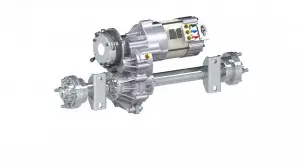
Component integration level tops the cost list. Split-style transaxles with separate motors, reducers, and controllers carry lower upfront costs but require extra assembly labor. Fully integrated all-in-one transaxle units combine all core parts into a compact structure, cutting assembly time while raising material and design costs.
Material quality also creates clear price gaps. High-grade alloy housing, wear-resistant gear sets, and corrosion-resistant internal parts extend service life but increase raw material expenses. Entry-level transaxles use standard cast iron and basic gears to keep costs low, ideal for budget golf cart models.
Certification and quality compliance add hidden cost layers. Transaxles with global safety certifications, quality management system validation, and environmental compliance testing require more research and inspection investment, reflecting higher wholesale prices for certified units.
Customization requirements further adjust costs. Standard universal transaxle models fit most mass-produced golf carts with no extra fees. Custom modifications for voltage, torque, mounting size, or special terrain adaptability trigger additional design and production costs for manufacturers.
Common Electric Transaxle Types for Golf Carts & Cost Range
Different electric transaxle designs serve distinct golf cart applications, with each type carrying a clear cost bracket tailored to performance needs. Below is a straightforward comparison tailored to manufacturer procurement needs.
| Transaxle Type | Core Application | Cost Range (Wholesale) | Performance Feature | Ease of Integration |
|---|---|---|---|---|
| Standard 24V Basic Transaxle | Residential light-duty golf carts | Low | Stable output, basic load capacity | Easy |
| 36V Mid-Range Integrated Transaxle | Commercial golf course carts | Mid | Balanced torque and energy efficiency | Moderate |
| 48V High-Power Transaxle | Heavy-duty off-road golf carts | High | Strong climbing power, high load tolerance | Moderate |
| Low-Speed Special Transaxle | Tourist shuttle multi-passenger carts | Mid-High | Smooth low-speed operation, noise reduction | Easy |
Standard 24V models are the most cost-effective choice for entry-level golf cart production, suitable for flat terrain and light daily use. Mid-range 36V integrated versions strike the best balance between cost and performance, making them the most popular option for mainstream golf cart manufacturers worldwide. High-power 48V units target premium and off-road models, with higher costs offset by superior durability and adaptability to complex terrains.
How Technical Specifications Impact Pricing
Small differences in technical parameters can lead to noticeable cost variations in electric transaxles for golf carts. Manufacturers need to link specs directly to production costs to avoid overpaying for unnecessary performance.
Motor power rating is a primary price driver. Low-power 300W to 800W transaxles fit standard small golf carts with minimal cost. Power ratings above 1000W up to 2200W require upgraded winding materials and heat dissipation structures, pushing costs significantly higher for heavy-duty vehicle builds.
Torque and gear ratio also influence pricing. Higher torque transaxles use reinforced gear structures and precision machining to support heavy loads and steep slopes, adding manufacturing costs. Standard gear ratios fit regular use at lower cost, while large gear ratio designs for enhanced climbing ability come with a premium price tag.
Noise reduction and sealing design affect long-term cost value. Transaxles with precision gear matching and fully sealed waterproof structures cost more upfront but reduce maintenance claims and warranty costs for manufacturers. Basic non-sealed models save initial spending but carry higher after-sales risk.
Supply Chain & Market Variables Affecting Transaxle Costs
Global supply chain dynamics play a major role in electric transaxle pricing for golf cart manufacturers, independent of product design and specs. Raw material price volatility directly impacts production costs for transaxle suppliers. Fluctuations in copper, aluminum, and alloy steel prices quickly pass through to wholesale transaxle quotes throughout the market.
Production scale creates obvious cost differences. Mass-order bulk procurement qualifies manufacturers for lower unit prices, while small-batch custom orders face higher per-unit costs due to fixed production setup fees. Regional logistics and shipping costs also add to the total procurement budget, especially for manufacturers sourcing cross-border components.
Industry market demand shifts drive seasonal price changes. Peak seasons for golf cart production push up transaxle demand, leading to slight wholesale price increases. Off-season procurement often brings more competitive quotes and flexible delivery terms for manufacturers.
Cost-Saving Strategies for Golf Cart Manufacturers
Golf cart manufacturers can optimize electric transaxle spending without sacrificing product quality or vehicle performance through practical procurement and production strategies.
Prioritize standard universal transaxle models over customized designs whenever possible. Standardized off-the-shelf units eliminate custom design fees and shorten production lead times, ideal for mass-produced mainstream golf cart lines. Reserve customization only for high-end exclusive models to control overall costs.
Establish long-term partnerships with reliable transaxle suppliers. Long-term cooperation locks in stable pricing, avoids seasonal price hikes, and gains access to priority delivery and technical support. Consistent supplier collaboration also reduces quality inspection costs and component replacement risks.
Optimize batch procurement planning. Combine quarterly or half-year order plans to increase order volume, qualifying for bulk discount pricing. Reasonable inventory planning prevents emergency small-batch orders that come with inflated unit costs and rush shipping fees.
Balance upfront cost and long-term durability. Choosing mid-range integrated transaxles instead of the cheapest entry-level models cuts long-term warranty and after-sales costs. Durable components reduce product failure rates, enhancing brand reputation while lowering comprehensive operational expenses.
Future Cost Trends of Golf Cart Electric Transaxles
The electric transaxle market for golf carts is set to follow clear cost and technology trends in the next few years. Integrated three-in-one transaxle designs will gradually become mainstream, with scaled production driving down unit costs of high-performance integrated models year by year.
Advancements in manufacturing technology, such as precision gear processing and lightweight material application, will stabilize raw material waste and production costs. As production efficiency improves, mid-range transaxle prices are expected to remain steady with slight downward adjustments in mass wholesale markets.
Market demand for low-carbon and energy-efficient golf carts will boost demand for high-efficiency transaxle units. While high-efficiency models will carry a small initial cost premium, their energy-saving performance will become a selling point that supports higher golf cart retail prices for manufacturers. Overall, the transaxle market will move toward stable pricing, higher integration, and more cost-effective performance.
Frequently Asked Questions About Electric Transaxle Pricing
What is the biggest factor affecting golf cart electric transaxle cost?
Integration level and motor power rating are the top two factors. Integrated high-power models cost significantly more than split low-power basic units.
Is it worth investing in high-priced certified transaxles for mass production?
Yes. Certified transaxles reduce quality failure risks, simplify global market access, and lower long-term after-sales maintenance costs for manufacturers.
How can manufacturers get the lowest transaxle unit price?
Focus on bulk long-term orders, select standard universal models, and cooperate directly with professional transaxle suppliers to cut intermediate markup costs.
Will electric transaxle costs rise steadily in the future?
No. Scaled production of integrated designs and improved manufacturing efficiency will keep overall prices stable, with mid-range models seeing slight cost reductions over time.
Conclusion
Electric transaxle cost for golf cart manufacturers is shaped by technical design, material quality, product type, supply chain dynamics, and market demand. Understanding these cost factors, comparing different transaxle types, and adopting targeted procurement strategies allow manufacturers to balance budget control and product performance perfectly.
As the golf cart industry shifts toward higher integration and energy efficiency, selecting cost-effective transaxle solutions will remain a core competitive advantage. By focusing on standardization, bulk cooperation, and long-term cost value instead of just upfront pricing, manufacturers can optimize component costs while delivering reliable, market-competitive golf cart products.
Post time: May-27-2026